
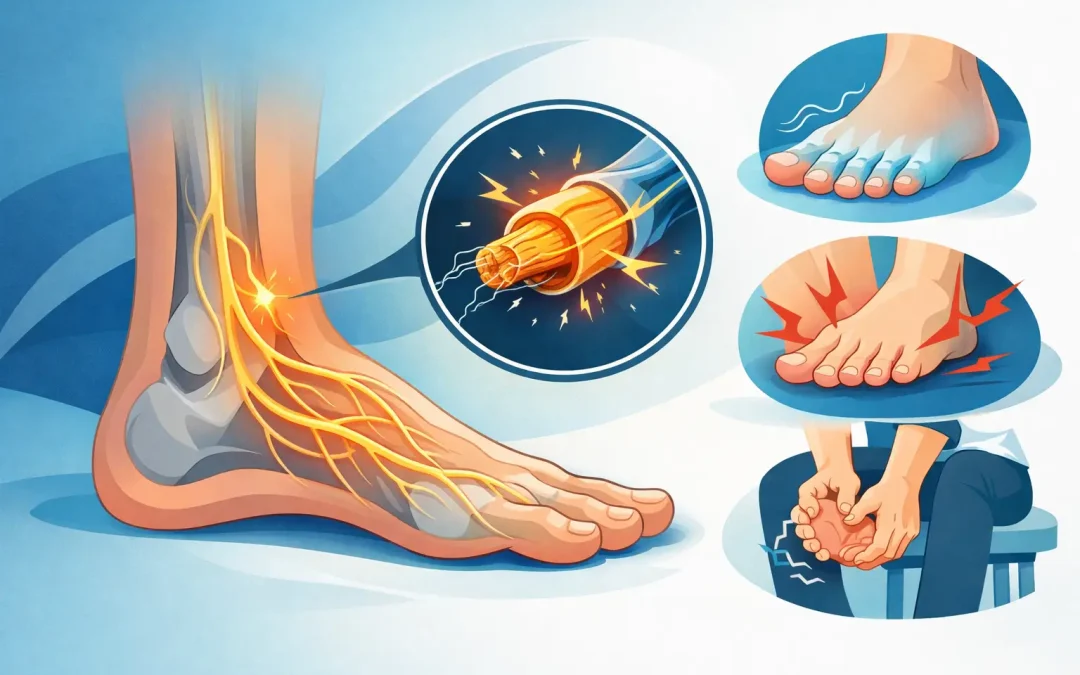
A sock that feels bunched under your toes when it is not there, a burning sensation that worsens at night, or a small cut you never felt can all be peripheral neuropathy foot symptoms. These changes are easy to dismiss at first, especially when they come and go. But reduced sensation in the feet can allow injuries, infections, and pressure sores to progress without the usual warning of pain.
Peripheral neuropathy means that nerves outside the brain and spinal cord are damaged or not working properly. Because the longest nerves travel to the feet, symptoms often begin in the toes and gradually move upward. Diabetes is a common cause, but it is not the only one. Medication effects, vitamin deficiencies, alcohol use, kidney disease, circulation concerns, autoimmune conditions, prior chemotherapy, and nerve compression may also play a role.
Common Peripheral Neuropathy Foot Symptoms
Neuropathy does not feel the same for everyone. Some people notice uncomfortable sensations; others notice a loss of feeling. Either pattern deserves attention because pain is not the only sign of a problem.
Numbness and reduced protective sensation
Numbness often starts at the tips of the toes and may spread across the forefoot or up the legs in a stocking-like pattern. Patients may describe their feet as asleep, padded, heavy, or disconnected from the ground. They may have difficulty noticing temperature, a pebble in a shoe, or the pressure from a tight seam.
This reduced protective sensation is especially concerning for people with diabetes. A blister, splinter, cracked heel, or rubbing shoe can become a wound before the person realizes it is there. The absence of pain does not mean the foot is healthy.
Burning, tingling, and electric sensations
Damaged sensory nerves can send signals even when there is no injury. Burning, pins-and-needles, buzzing, stabbing pain, and sudden electric-shock sensations are common descriptions. Symptoms may be worse in the evening or when bed sheets touch the feet.
Painful neuropathy can interfere with sleep, walking, and daily activities. It may also make shoes uncomfortable. Treatment should be individualized because relief may require a combination of medical management, footwear changes, activity adjustments, and care for the underlying cause.
Changes in balance and walking
Your feet provide the brain with constant information about position and pressure. When that information is reduced, balance can become less reliable. You may feel unsteady on uneven ground, need to watch where you are walking, or have more trouble in dim lighting.
Weakness is less common than sensory symptoms but can occur when motor nerves are affected. Toe weakness, foot slapping, tripping, or difficulty lifting the front of the foot should be evaluated promptly. These signs may have causes beyond neuropathy and should not be assumed to be a normal part of aging.
Skin, nail, and pressure changes
Neuropathy can change how the foot responds to pressure. Calluses may build up beneath the ball of the foot or on the tips of the toes. Dry, cracked skin may develop, and certain areas can become red from repeated friction. If foot shape changes from bunions, hammertoes, or Charcot-related changes, pressure can become concentrated in a smaller area and raise the risk of skin breakdown.
Nail problems can also go unnoticed when feeling is limited. An ingrown nail, thick fungal nail, or nail edge pressing into the skin may lead to inflammation or infection without significant pain.
Why Foot Symptoms Need Timely Attention
The main risk of peripheral neuropathy is not discomfort alone. It is the loss of the body’s normal alarm system. Pain usually tells us to shift weight, remove a tight shoe, clean a cut, or rest an injured area. Without that feedback, repeated pressure can cause a callus, then a blister or ulcer beneath it.
For people with diabetes, poor circulation, immune system concerns, or a history of foot ulcers, this process can move quickly. An open wound can become infected and may be difficult to heal. Early podiatric care can identify pressure points, check circulation and sensation, safely treat calluses and nails, and help prevent a small issue from becoming a serious one.
When to Seek Urgent Foot Care
Schedule an evaluation when new numbness, burning, tingling, or unexplained changes in walking persist or worsen. A podiatric examination can assess sensation, skin integrity, circulation, footwear wear patterns, foot structure, and areas of excess pressure. Your medical team may also recommend testing to identify or manage the underlying cause.
Seek urgent medical attention for any of the following:
- An open sore, drainage, bleeding, or a blister that does not improve quickly
- Redness, swelling, warmth, foul odor, pus, fever, or chills
- A black, blue, or unusually pale toe or area of skin
- Sudden weakness, a new foot drop, or a rapid change in foot shape
- A wound in a person with diabetes, known circulation disease, or prior amputation
Do not try to trim deep calluses, cut corns, or treat an ingrown nail yourself if you have reduced sensation or diabetes. Small cuts from home treatment can create an entry point for infection.
Daily Foot Protection for Neuropathy
A consistent routine is one of the most practical ways to reduce risk. Check the tops, soles, heels, and spaces between the toes every day. A handheld mirror can help, or a family member or caregiver can assist if bending or vision is difficult. Look for redness, cracks, swelling, blisters, drainage, calluses, or changes in nail color.
Wash and dry feet carefully, particularly between the toes. Use moisturizer on dry skin, but avoid applying it between toes where excess moisture can encourage skin problems. Wear clean socks and properly fitted shoes with adequate toe room and a protective sole. Avoid walking barefoot, even indoors, because a small object or hot surface can injure a numb foot.
Check the inside of shoes before putting them on. A folded sock, loose insole, pebble, or rough seam can create pressure without being felt. Shoe choice matters, but there is no single best shoe for every patient. Someone with a prominent bunion, hammertoes, balance concerns, swelling, or a prior ulcer may need a different fit or additional protection than someone with mild numbness and no structural changes.
How Podiatric Care Can Help
Foot care for neuropathy is not limited to treating problems after they appear. Regular examinations can establish a baseline, identify high-pressure areas, and detect early skin changes before they become wounds. Care may include safe nail and callus treatment, wound care, offloading of painful or vulnerable areas, diabetic foot evaluations, custom orthotics, footwear guidance, and coordination with your primary care physician or diabetes specialist.
For patients who have difficulty traveling, access to care matters as much as the treatment plan. Premium Podiatry Foot and Ankle Care provides comprehensive podiatric evaluation and can help patients and caregivers understand when office-based or mobile foot care is appropriate.
Neuropathy can be gradual, but foot complications do not have to be. If your feet feel different, look different, or are becoming harder to trust when you walk, arrange an examination before a minor change has the chance to become a wound.